

Garden irrigation on Mallorca: a practical guide
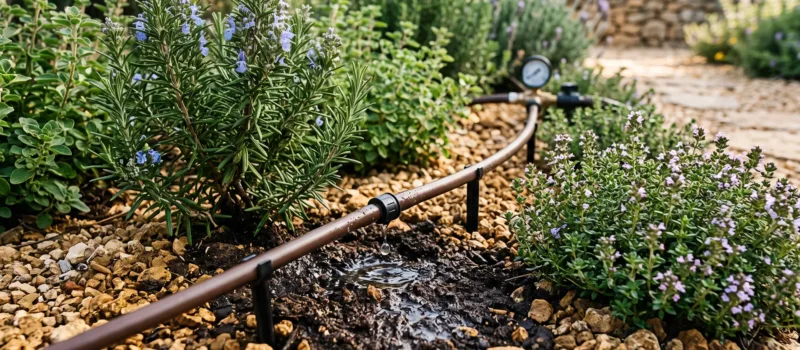
Almost every planted garden on Mallorca is irrigated, because five months without meaningful rain is not something planting design alone solves. What separates a system that runs for fifteen years from one that is a running repair bill is mostly decided before anything is buried: how the garden is divided into zones, where the water comes from, and whether the layout matches the planting or the shape of the lawn.
Key takeaways
- Zone by water need, not by geography. A hedge and a pot terrace on the same valve means one of them is always wrong.
- Drip is the default here. Spray belongs to lawns and dense ground cover, not to shrub beds.
- The water source changes everything downstream: pressure, filtration, storage and what happens in August.
- Record where the pipes run. The expensive part of every future repair is the search, not the fitting.
The types, and what each is for
| Type | Suits | Watch out for |
|---|---|---|
| Surface drip line | Shrub beds, hedges, trees | Sun damage on exposed line, emitters blocked by limescale |
| Subsurface drip | Lawn and ground cover | Root intrusion, harder to inspect and repair |
| Micro spray | Dense ground cover, new planting | Evaporation loss, wind drift, wetting walls and paths |
| Pop up sprinkler | Lawn | High water use, overspray onto paving and pool |
| Individual drippers | Pots, specimen trees, terraces | Needs a separate zone; pots dry far faster than beds |
| Hose points only | Very small or all native planting | Depends on somebody being there, which rental property is not |
Zoning is the design decision that matters
A zone is a group of plants that can share one watering schedule. The temptation is to zone by area, so that the front garden is one valve and the back another, and it is the most common reason a system waters badly. Trees want infrequent deep watering, a lawn wants frequent shallow watering, pots on a hot terrace want a short run every day in August, and established natives want almost nothing after their second year. Put any two of those on the same valve and the schedule is a compromise that suits neither. Sun and shade split zones too: the same border can need twice the water on its west end.
Where the water comes from
- Mains supply. Simplest, and the pressure is usually adequate. Two caveats here: it is the most expensive water, and pressure in some villages drops noticeably in August, which is when the garden needs it most.
- Cistern or aljub. Stored rainwater, often the traditional arrangement on a finca. Needs a pump and a level sensor, and an empty cistern looks exactly like a pump failure from the garden.
- Well or borehole. Common inland. Abstraction is regulated and wells need to be registered and authorised, so establish the legal position of an existing well before designing a garden that depends on it.
- Treated water. Some communities and larger properties reuse water. Filtration and the choice of emitters matter more, and not every plant tolerates it.
Whatever the source, restrictions can apply in a dry year and they change. Our note on water restrictions and Mallorca gardens covers how that has affected garden watering, and the town hall is the authority on the current position for your municipality.
Filtration and hard water
Water here is hard, and limescale is the main enemy of a drip system. Emitters block gradually and unevenly, which shows up as one plant declining rather than a zone failing, so it is easy to blame the plant. A filter appropriate to the source, fitted where it can actually be reached, plus an annual clean, prevents most of it. Well and cistern water needs more filtration than mains, not less, because it carries sediment as well as minerals. Pressure regulation belongs in the same part of the system: drip line run at mains pressure blows emitters and splits at the joints.
Controllers, sensors and being away
A basic controller runs a clock. That is enough for a garden somebody walks around every week, and not enough for a property that is empty for months. The additions worth considering are a rain sensor so the system skips a wet week, a soil moisture sensor for larger schemes, a flow sensor that shuts a zone down if a line splits, and remote access so a schedule can be changed without being on the island. Power cuts are common here in autumn and wipe the programme on older units, which is a frequent cause of a garden that simply stopped being watered with nothing visibly broken.
What a good installation includes
- A zone plan that matches the planting plan, agreed before anything is dug.
- Filtration and pressure regulation sized to the water source.
- Valve boxes that can be opened and reached, not buried under a terrace laid afterwards.
- Sleeving under any paving or drive, so a future line can be pulled through without lifting it.
- A commissioning run of every zone with the owner present, and the schedule written down.
- An as built drawing or photographs of the open trenches. This is the single most valuable document the garden will ever have.
Retrofitting an existing garden
Putting irrigation into a mature garden is mostly a question of routes. Established roots, existing terraces and dry stone walls decide where a line can go, and that usually means more surface drip and fewer trenches than a new build. It is worth doing at the same time as any other groundwork, because sharing a trench with a lighting cable or a drainage run is far cheaper than opening the ground twice. If the existing system is failing rather than absent, the choice between repair and replacement is covered in the fault finding guide.
What kind of irrigation is best for a Mallorca garden?
Drip line for shrubs, hedges and trees, individual drippers for pots and specimens, and spray or subsurface line only where there is lawn or dense ground cover. Drip puts water at the root and loses far less to evaporation.
How many zones does a garden need?
As many as there are groups of plants with genuinely different watering needs. Trees, lawn, shrub beds, new planting and pots are usually separate. Zoning by area rather than by need is the most common design mistake.
Can I irrigate from a well on Mallorca?
Wells are common, but abstraction is regulated and a well needs to be registered and authorised. Confirm the legal status of an existing well before planning a garden that depends on it, and expect to need more filtration than a mains system.
Why do drip emitters block here?
Hard water. Limescale builds in the emitter and restricts it gradually, so one plant declines while the zone appears to run normally. A correctly sized filter and an annual clean prevent most of it.
Getting it specified and quoted
We do not install irrigation. Describe the garden, the water source and whether the property is occupied year round, and we pass the request to vetted irrigation companies on Mallorca covering your area, who quote you directly. Existing systems that need attention go to irrigation repair instead.
Request free quotes and compare the zone plans, not just the totals. Two quotes with the same figure can describe very different systems. What an irrigation system costs sets out the ranges, and how often to water a garden here covers the schedule once it is in.
This might be interesting to you
What to do in a Mallorca garden in winter
The jobs worth doing between December and February, and why winter is the most productive season her...
Dry stone walls in Mallorca: what marges cost and why they last
What a marge is, why dry stone outlives mortar on this island, what a wall costs to build or repair,...
The best privacy hedges for a Mallorca garden
What screens quickly without needing water all summer, what to avoid, and the height question worth ...
What does landscaping cost in Mallorca?
Typical ranges for each part of a garden project on Mallorca, how size and finish move them, and wha...