

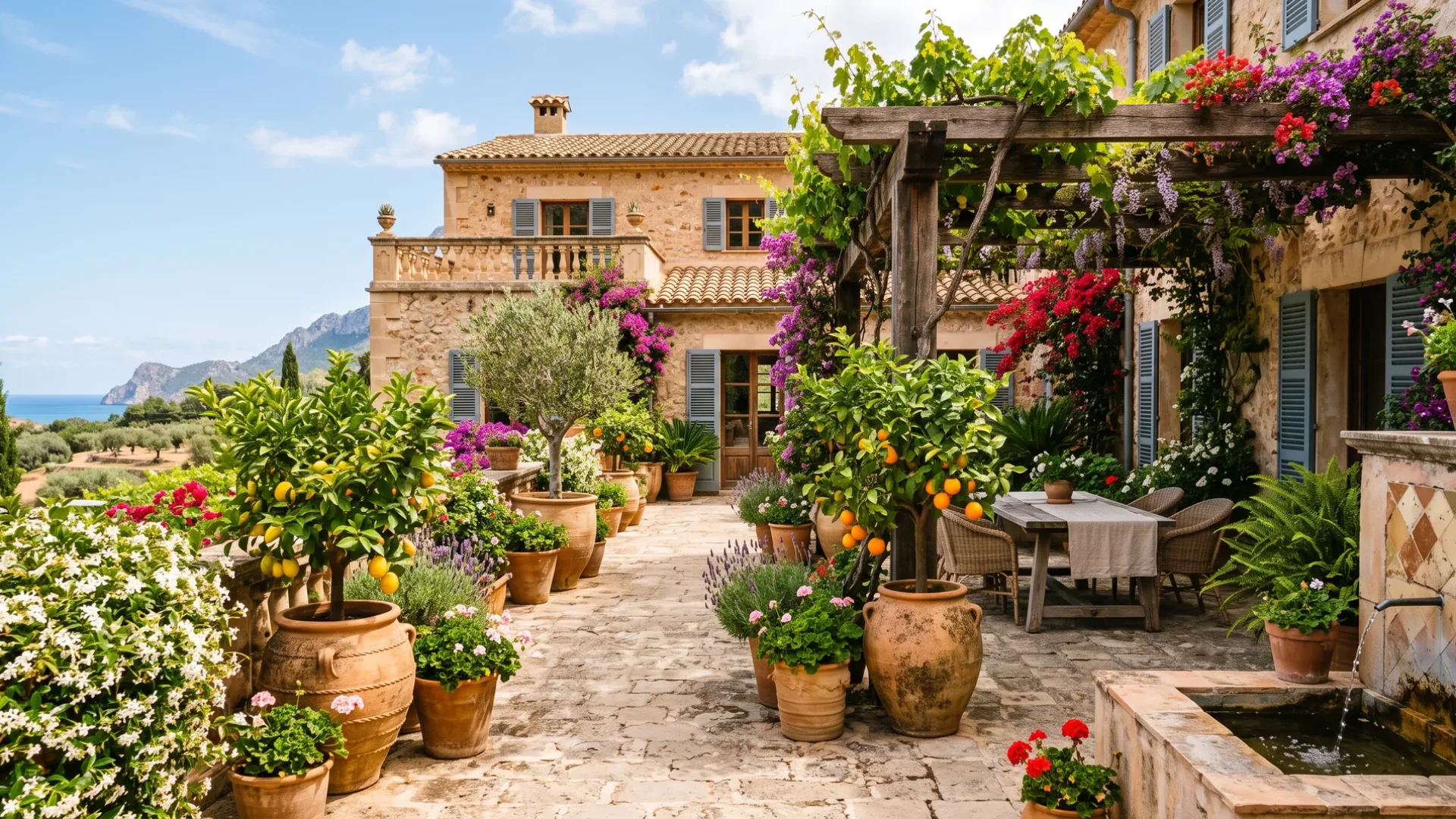
Mediterranean Garden
The style that came from this climate rather than being imported into it. Evergreen structure, gravel and stone, a short intense flowering season and long quiet months in between.
request describes the job
companies see it
for you, always
obligation to accept
What makes a garden read as Mediterranean
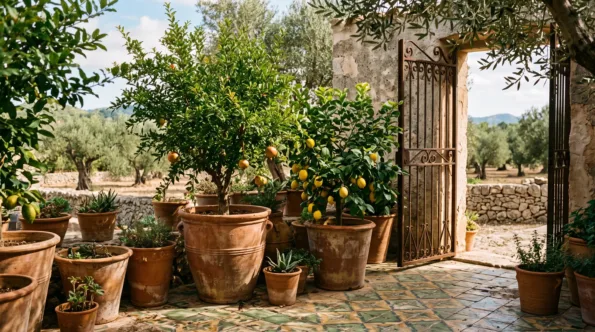
Silver and grey green foliage rather than a wall of bright green. Plants that hold a shape without being clipped hard. Gravel, stone and terracotta doing the work that lawn and bark do in a northern garden. Shade from a tree instead of from a structure.
The planting is layered rather than bedded. A canopy of olive, carob or pine, a middle layer of myrtle, rosemary, cistus and lentisc, and low aromatic ground cover that releases scent when you walk past it.
The last ingredient is restraint. These gardens work when a small number of species repeat across the plot, and they fall apart when every bed contains something different.
Typical ingredients
- Olive, carob, almond and holm oak for structure
- Rosemary, lavender, cistus, myrtle and germander
- Gravel mulch instead of bark
- Dry stone walls and terracotta pots
- Clipped forms kept loose rather than tight
- Drip irrigation reduced after establishment
- A shaded seating area under a tree
- Colour concentrated between March and June
How this gets built
Is this an expensive style to build?
The planting is usually cheaper than a lawn and hedge garden, and the stonework is usually not. See the cost guide for the ranges each part sits in.
How much maintenance does it need?
Less than most alternatives once established, though it still needs a proper cut back each year. Neglected entirely, it becomes scrub.
Like this? Get it priced
Describe your plot and companies that plant this way will quote you directly.