

Dry Garden
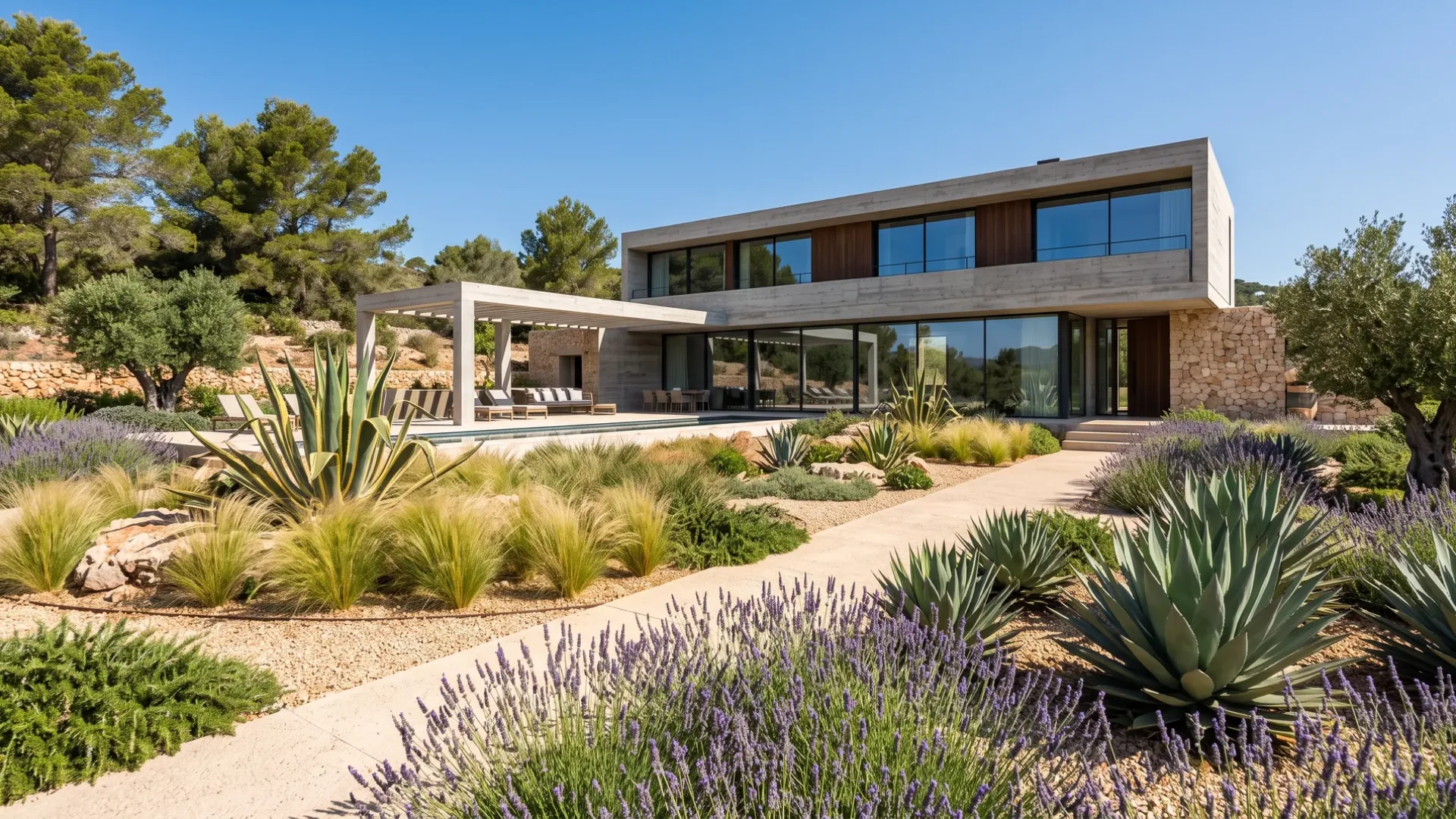
The version of a Mallorcan garden that stops arguing with summer. Deep gravel, tough planting and an irrigation system that exists to get things established and then largely goes quiet.
request describes the job
companies see it
for you, always
obligation to accept
Gravel is structure, not decoration
A proper dry garden has a gravel layer deep enough to keep the soil surface dry while the root zone underneath stays cool and damp. That is what suppresses weeds, cuts evaporation and stops the crown of a plant rotting after an autumn storm.
The planting reads as texture rather than as flower beds. Grasses, mounded shrubs and spiky forms set against open gravel, with the spaces between plants doing as much work as the plants themselves.
It looks its best in late spring, silvers off through summer and comes back after the first serious rain. Anyone expecting a garden that peaks in August is looking at the wrong style, on this island or any other.
Typical ingredients
- Deep gravel or crushed stone mulch
- Free draining ground, opened up before planting
- Grasses, euphorbia, cistus, phlomis and santolina
- Succulents and agave used sparingly
- Boulders and stone as part of the composition
- Drip irrigation for the establishment years only
- No lawn anywhere
- Wide spacing so plants reach full form
How this gets built
Does a dry garden ever need watering?
For the first two or three years, yes, and properly. After that many plots run on winter rain alone, with occasional help in an extreme summer.
Will it look dead in August?
It will look silver and quiet rather than green. That is the honest trade, and it is why the style suits some owners and not others.
Like this? Get it priced
Describe the plot and let companies that plant dry gardens quote you.