

Mediterranean garden plants that work on Mallorca
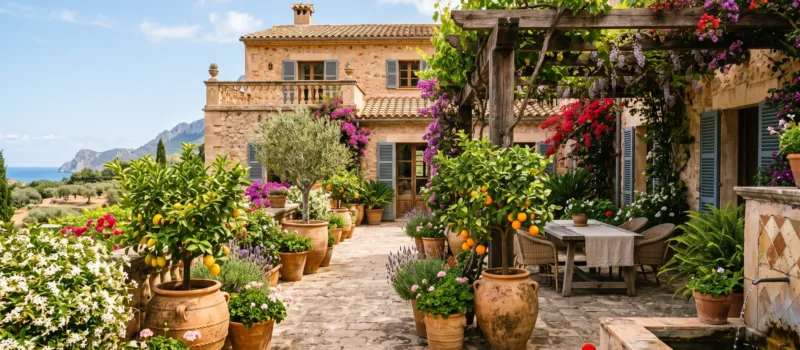
The plants that thrive on Mallorca with little water are the ones that were already growing here: rosemary, lavender, santolina, mastic, myrtle, wild olive, carob and Aleppo pine. Add oleander and bougainvillea for colour, succulents for the hot corners, and you have a garden that survives August without a hosepipe.
Key takeaways
- Native and long-established Mediterranean species need water for two or three years, then very little.
- Aspect matters more than soil here. A south-facing wall and a shaded courtyard are two different climates on one plot.
- Olives, almonds and vines are host plants for Xylella fastidiosa, so buy only from nurseries that supply a plant passport.
- Planting and irrigation together cost €7,800 to €11,200 on a medium garden, whatever species go in.
What grows well without irrigation?
A useful way to think about a Mallorca planting list is by job rather than by botany. Some plants give you height and shade, some give you evergreen mass, some give you scent and low structure, and a few give you colour through the worst of the heat.
| Plant | Where it belongs | Water once established |
|---|---|---|
| Wild olive (acebuche), carob, Aleppo pine | Shade and the structure of the garden | Almost none |
| Mastic (Pistacia lentiscus), myrtle | Evergreen mass, informal screening | Very little |
| Rosemary, lavender, santolina, thyme | Low planting, edges, gravel beds | Very little |
| Oleander, bougainvillea | Colour through July and August | Occasional deep watering |
| Agave, aloe, sedum | Hot exposed corners, gravel gardens | None in most years |
| Citrus, hydrangea, lawn | Sheltered courtyards, irrigated zones only | Regular, all summer |
That last row is the honest one. Citrus in a pot on a shaded patio is a Mallorcan classic and it works, but it is an irrigated plant in an irrigated position. Putting it in an exposed bed and hoping is how people conclude that nothing grows here.
Does aspect matter more than soil?
On most plots, yes. Soil here is thin, alkaline and stony almost everywhere, and while it can be improved, it is rarely the thing that kills a plant. Exposure is. A bed against a south-facing stone wall bakes from midday to sunset and radiates heat back at the plants half the night. Six metres away, in the shade of a carob, you can grow things that would fail in the open by the first week of July.
Wind is the other half of it, particularly near the coast. Salt-laden wind burns soft growth and dries everything it touches, which is why coastal planting leans on tough, small-leaved species and why hedges go in before ornamentals rather than after.
How long until they cope on their own?
Two to three years for shrubs, longer for trees. A drought-tolerant plant is one with a root system deep enough to find its own water, and that system does not exist when the plant leaves the nursery. First summer it needs consistent watering. Second summer, less. By the third, most of the list above is looking after itself except in an exceptional year.
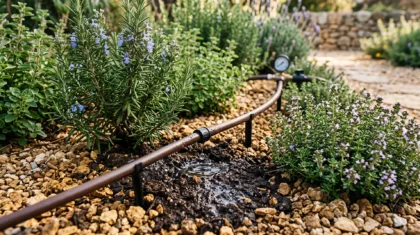
The practical consequence is that new planting should sit on its own irrigation zone. When the mature part of the garden is wound down to almost nothing, the young part still needs water, and one valve cannot do both.
Which pests should shape the planting list?
Two, and both are specific to this island rather than general gardening advice. Xylella fastidiosa is established in the Balearics, with more than 1,800 confirmed cases recorded across the archipelago by 2024, and its hosts include olive, almond and vine. Buying from a registered nursery that supplies a plant passport is the sensible precaution, and moving host plants between islands is restricted. We cover the detail in what Xylella means for a Mallorca garden.
The other is the red palm weevil, which has killed a great many Canary Island date palms here. If a palm is part of the plan, it needs a treatment regime rather than good intentions. That is set out in the guide to palms and the weevil.
What about pots?
Pots are the exception to everything above. A terracotta pot on a hot terrace dries in a day, and no amount of drought tolerance in the plant will save it if the root ball has turned to dust. Group pots, shade the pots themselves where you can, and put them on their own irrigation line with their own schedule. Or accept that they need a hand with a watering can, which is how most Mallorcan patios have always worked.
How the matching works
We do not plant gardens or run a nursery. We keep a list of vetted planting companies on Mallorca, pass your job to the ones that cover your area, and they quote you directly. Describe the plot, including which way it faces, and the quotes come back specific rather than generic.
What are the best plants for a Mallorca garden?
Rosemary, lavender, santolina, mastic and myrtle for structure and scent, wild olive, carob and Aleppo pine for shade, and oleander or bougainvillea for summer colour. All cope with heat and thin, alkaline soil.
How long do new plants need watering?
Two to three years for shrubs and longer for trees. Drought tolerance depends on an established root system, so new planting belongs on its own irrigation zone until it has one.
Can I still grow citrus and lawn on Mallorca?
Yes, in sheltered, irrigated positions. Both are thirsty, and lawn is usually the first thing restricted when a municipality tightens its watering rules.
Is it safe to plant olive trees on Mallorca?
Olives are host plants for Xylella fastidiosa, which is present in the Balearics. Buy from a registered nursery that supplies a plant passport, and do not bring host plants over from another island.
Start with the plot, not the plant list
Aspect, wind and water decide most of it before anyone opens a catalogue. Send those three facts through with a photograph or two and vetted Mallorca companies will quote a planting scheme that suits the ground you actually have. For the wider list by role in the garden, see the best plants for a Mallorca garden.
This might be interesting to you
Garden maintenance for communities and urbanisations in Mallorca
How communal garden contracts are priced, what the specification should say, and how to compare tend...
What to do in a Mallorca garden in winter
The jobs worth doing between December and February, and why winter is the most productive season her...
The red palm weevil and your palms in Mallorca
How to tell whether a palm is infested, what treatment involves, and why an untreated Canary Island ...
Irrigation system not working: what to check first
Dead zones, buried leaks and a controller nobody understands. How to work out which one you have bef...