

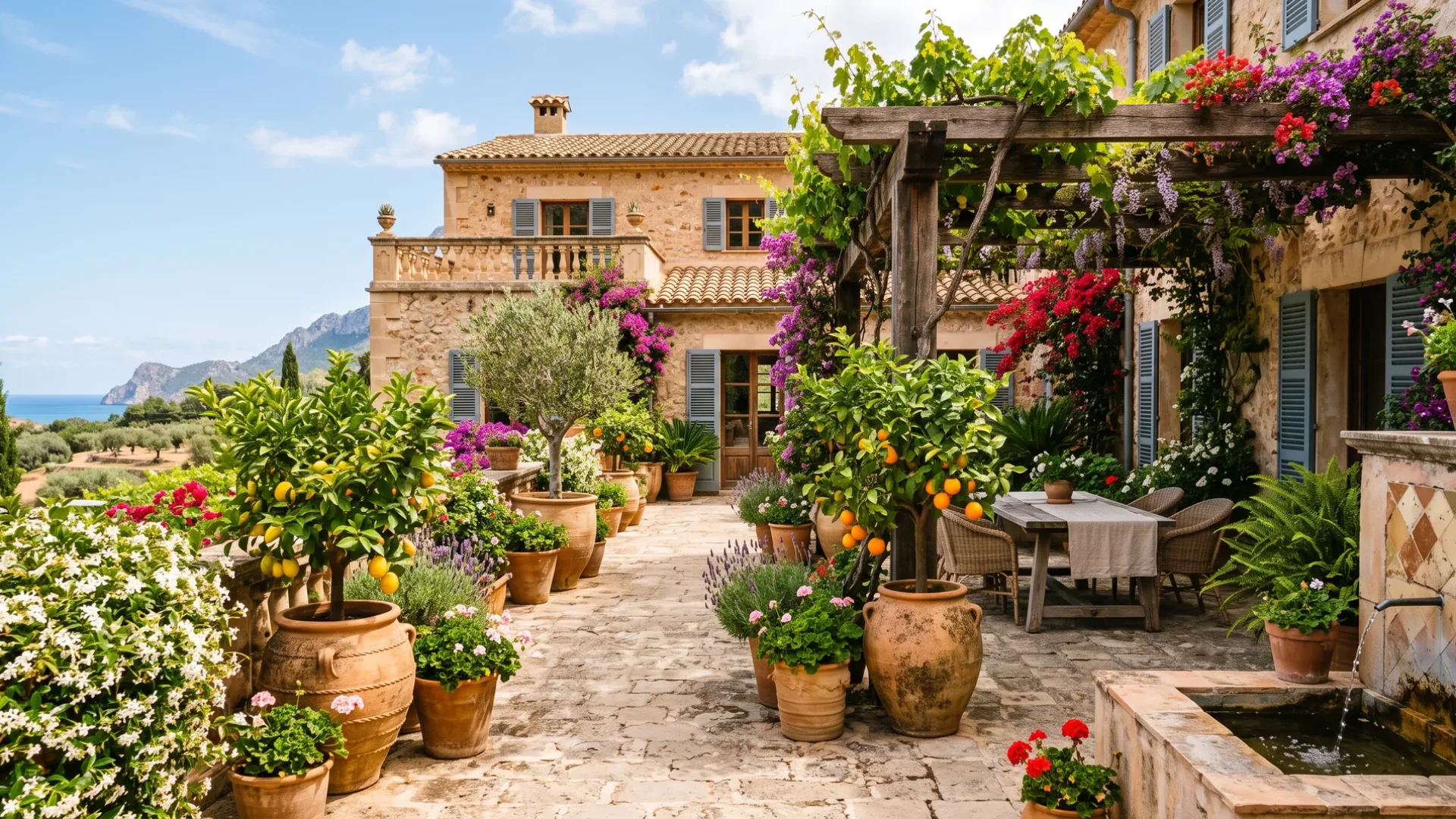
Naturalistic Garden
Planting that looks as though it arrived by itself, using mostly what already grows on this island. It is the least formal style here and the one that asks the most judgement to keep looking intentional.
request describes the job
companies see it
for you, always
obligation to accept
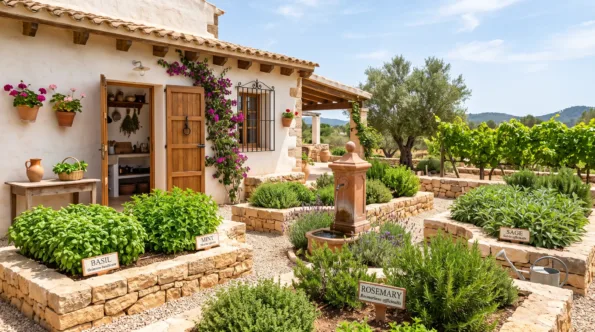
Loose is not the same as unmanaged
A naturalistic garden drifts species into one another instead of holding them in beds, and it lets seed heads and dry stems stand through summer. What keeps it from reading as neglect is a hard frame around it: a mown edge, a clean path, a wall, a piece of deliberate geometry somewhere in view.
The plant list leans on what grows in the garrigue and the field margins already. Lentisc, cistus, asphodel, wild olive, euphorbia and native grasses, with cultivated species that share their habit mixed in.
It is also the most useful style for wildlife on the island. Flowering across a long season, seed left standing, water somewhere accessible and no clearing of every last stem in autumn.
Typical ingredients
- Native and locally adapted species as the backbone
- Species drifted together rather than blocked
- Grasses and seed heads left standing
- A hard edge or path to frame the looseness
- A pond or water bowl for wildlife
- Log and stone piles left in quiet corners
- Cutting back once a year rather than constant tidying
- Little or no irrigation once established
How this gets built
Will the neighbours think it looks untidy?
They might, if there is no frame around it. A mown strip, a clean edge or a wall is what tells everyone the looseness is a decision.
Is it cheaper than a conventional garden?
To maintain, usually. To plant, not necessarily, because sourcing native species in quantity can be harder than buying standard nursery stock.
Like this? Get it priced
Describe the plot and companies that plant this way will quote you.