

Best plants for a Mallorca garden
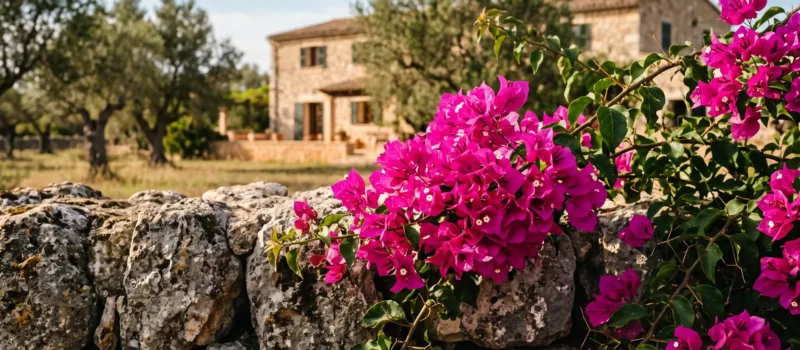
The plants that do well on Mallorca are the ones that expect the island’s year: a wet, mild winter, a short spring, then four or five months with almost no rain. Most gardens that disappoint were planted with species that expect summer rain, and no amount of irrigation fully makes up for it. The list below is grouped by the job a plant does in a garden rather than by botanical family, because that is how planting plans are actually put together.
Key takeaways
- The soil is usually alkaline limestone, which rules out acid lovers whatever you feed them.
- Choose by role first: structure, shade, screening, flower, ground cover. Species second.
- Coast and inland are different gardens. Salt and wind narrow the list far more than heat does.
- Newly planted natives still need watering for the first two summers before they are independent.
Start with the soil, not the catalogue
Most of Mallorca sits on limestone, so garden soil is typically alkaline, free draining and low in organic matter. That is the single biggest filter on any plant list. Camellias, rhododendrons, blue hydrangeas, azaleas and most acid loving shrubs will show yellowing leaves within a season or two no matter how well they are fed, because the iron in the soil is present but locked up at that pH. Pockets of deeper, more neutral soil exist, particularly in the Pla, and a soil test before a large planting order is cheap compared with replacing the plants.
What to plant, by the job it does
| Role in the garden | Reliable choices here |
|---|---|
| Structure and shade | Olive, carob, holm oak, Judas tree, Chinese elm, mulberry |
| Evergreen screening | Pittosporum, viburnum tinus, myrtle, laurel, oleander |
| Flowering climbers | Bougainvillea, plumbago, trachelospermum, wisteria, solanum |
| Scent and low hedging | Rosemary, lavender, santolina, teucrium, westringia |
| Ground cover instead of lawn | Dymondia, lippia, thyme, gazania, sedum |
| Dry sun and gravel beds | Agave, aloe, euphorbia, cistus, phlomis, ornamental grasses |
| Colour through the heat | Lantana, gaura, perovskia, salvia, hibiscus in a sheltered spot |
| Pots and terraces | Citrus, olive, dwarf palms, agapanthus, pelargonium |
The native shortlist
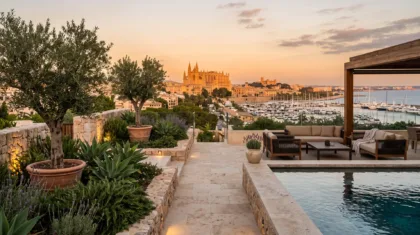
The Balearic natives are worth knowing because they are the plants that need nothing once established. The dwarf fan palm, Chamaerops humilis, is the only palm native to the island and is far more wind and cold tolerant than the Canary date palms most people picture. Wild olive, mastic, rosemary, cistus, myrtle and the Balearic St John’s wort all sit in the same category. A garden built on that backbone can carry a smaller number of thirstier ornamentals near the terrace, where they are seen, without the whole plot depending on water.
Coast, inland and the Tramuntana are three different lists
- Coastal plots. Salt spray and constant wind are the limiting factors, not heat. Tamarisk, pittosporum, westringia, juniper, atriplex and limonium hold up where softer foliage burns at the edges within a season.
- Inland and the Pla. Hotter in summer, colder in winter, and frost is possible in low lying spots. Deciduous fruit, mulberry, pomegranate and fig do well; the most tender tropicals do not.
- Tramuntana and higher ground. Cooler, wetter and often steeper. Holm oak, carob and terraced fruit belong here, and drainage on a slope matters more than drought tolerance.
- Anywhere with a pool. Keep large leaf drop, heavy fruit and aggressive roots away from the coping and the plant room.
What people plant and regret
Thirsty lawn in full sun is the most common one, and there are alternatives worth reading about before committing. After that: acid loving shrubs in limestone, fast growing screening that becomes a maintenance job every year, palms planted without any thought about the red palm weevil, and single specimen trees placed where their mature canopy will shade the whole terrace by year ten. Bamboo and some vigorous ground covers spread further than anyone intends and are hard to undo once they are in.
Buying plants: the paperwork that matters
Olive, almond, vine, oleander, rosemary, lavender and several other genera are hosts for Xylella fastidiosa, which is present on the island and under official control. Plants of those species should come with a plant passport from a registered nursery, and moving material informally between properties is how the bacterium travels. Ask for the passport at the point of order rather than on delivery day, and read more on what Xylella means for a Mallorca garden before buying mature specimens.
Newly planted is not the same as established
Drought tolerant describes an established plant, not a new one. Almost everything on the lists above needs regular water through its first two summers while the root system reaches down, and a great many “unkillable” Mediterranean shrubs are killed in July of their first year by an owner who took the label literally. The other half of that is drainage: more Mediterranean plants are lost to wet feet in a winter than to drought in a summer, so a heavy pocket of soil is worth improving before planting rather than after.
What plants grow best in Mallorca?
Mediterranean and Balearic natives: olive, carob, holm oak, dwarf fan palm, rosemary, myrtle, cistus, lavender and pittosporum, plus the classic climbers such as bougainvillea and plumbago. They expect a dry summer, which is the island’s defining condition.
Why do my hydrangeas and camellias struggle on Mallorca?
They are acid loving plants, and most soil here is alkaline limestone. The iron they need is in the soil but unavailable at that pH, so the leaves yellow. They can be grown in pots with ericaceous compost, but not reliably in open ground.
What can I plant near the coast?
Salt and wind tolerant species: tamarisk, pittosporum, juniper, westringia, atriplex, limonium and rosemary. Soft, large leaved plants scorch at the edges within a season in an exposed position.
Do I need a plant passport?
For species that host Xylella fastidiosa, including olive, almond, vine, oleander, rosemary and lavender, plants should be supplied with one by a registered nursery. It is worth asking for it when you order.
Turning a list into a planting plan
A plant list is not a planting plan. What position each species is in, how the beds are watered, what the soil needs first and what the garden looks like in its third year are the questions a designer or a planting contractor answers on site. We do not plant gardens ourselves. Describe the plot and we pass the request to vetted planting and plant sourcing companies on Mallorca covering your area, who quote you directly.
Request free quotes, or read on about planting for a dry garden, salt and wind tolerant planting and hedges that give privacy here.
This might be interesting to you
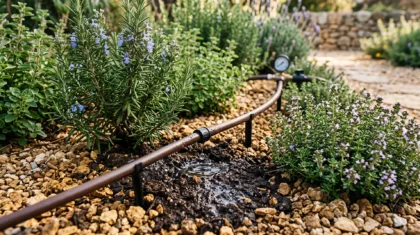
What does an irrigation system cost in Mallorca?
What drip irrigation costs on Mallorca, what a system is made of, and why the island's water rules m...
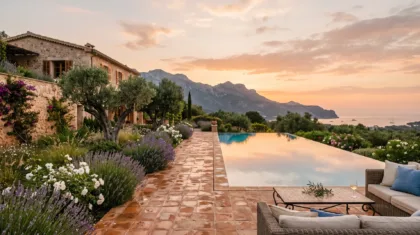
Garden maintenance calendar for Mallorca
What a Mallorca garden needs in each month of the year, and which jobs are genuinely time critical r...
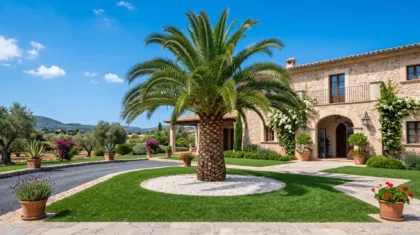
The red palm weevil and your palms in Mallorca
How to tell whether a palm is infested, what treatment involves, and why an untreated Canary Island ...
Plants for a coastal garden in Mallorca
What survives salt wind on an exposed coastal plot, how to build shelter, and why the first row matt...