

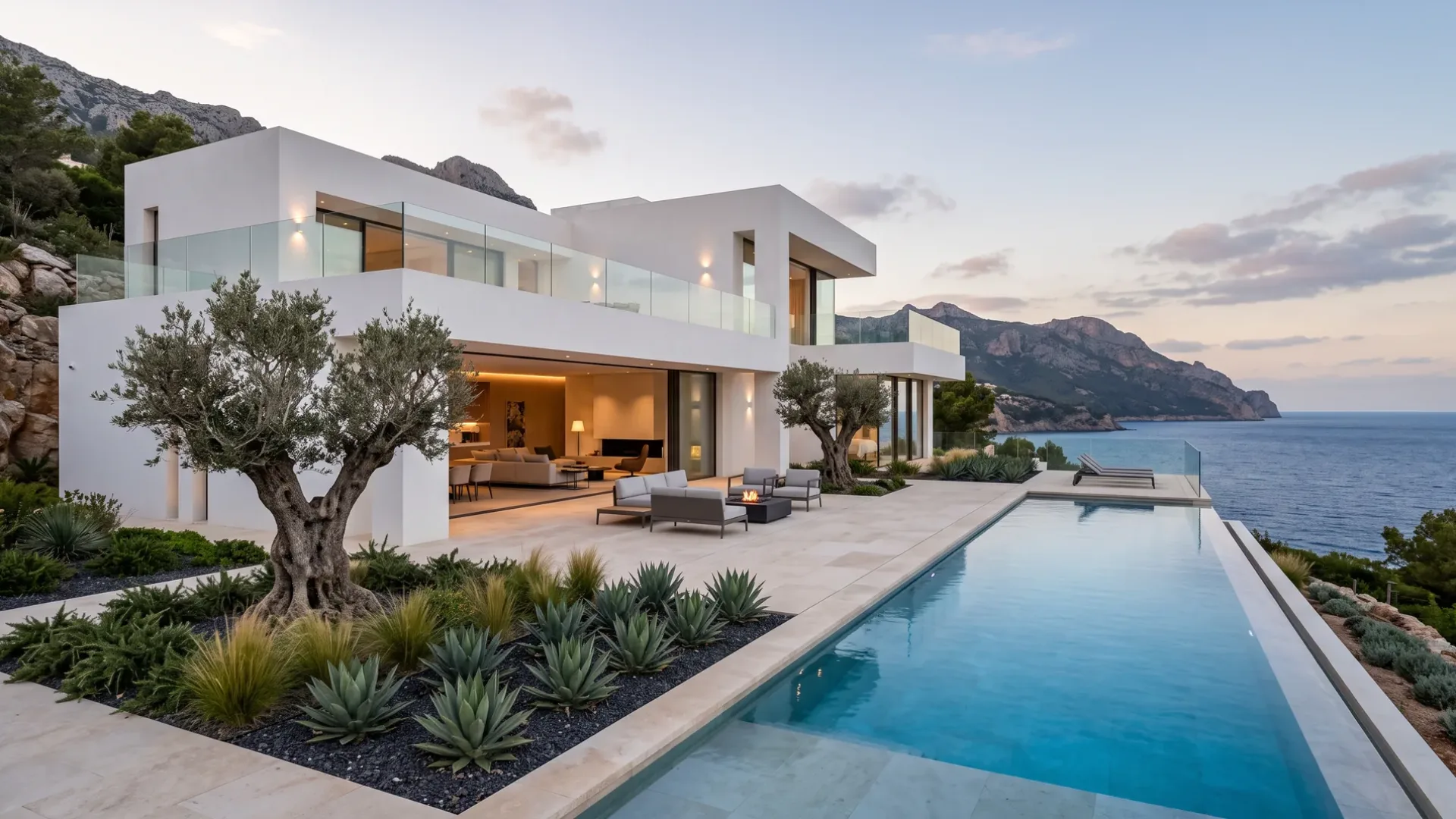
Contemporary Villa Garden
Straight lines, a short plant list and materials chosen to match the architecture. The garden is treated as an extension of the building rather than as a separate world outside it.
request describes the job
companies see it
for you, always
obligation to accept
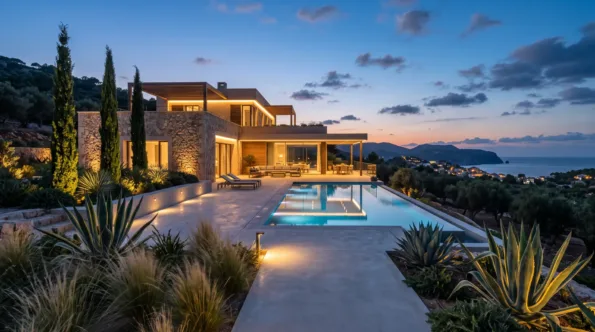
Geometry is the whole idea, so it has to be exact
A contemporary garden is unforgiving in a way a naturalistic one is not. A rendered wall two centimetres out of true or a paving joint that drifts is visible from the terrace forever, which is why this style costs what it costs.
The planting works by repetition. Blocks of one species, often grasses or clipped evergreen, set against large areas of a single hard material. Where a Mediterranean garden hides its edges, this one draws them.
The risk is heat. Large pale surfaces reflect a great deal of light and a garden with no canopy becomes unusable in August, so the good examples always have shade built in somewhere, even if it is a single mature tree in a cut out.
Typical ingredients
- Large format paving and rendered walls
- Blocks of a single species rather than mixed beds
- Clipped evergreen and ornamental grasses
- Corten steel, concrete and honed stone
- A reflecting pool or a linear water element
- Recessed and shielded lighting
- A sharp edge between planting and surface
- One mature specimen tree as the focal point
How this gets built
Does a modern garden need less maintenance?
Not necessarily. Clipped forms and a sharp edge between materials need regular attention to keep looking deliberate rather than neglected.
Can this style work on a sloping plot?
Yes, and it often looks best there, because the level changes give the geometry something to do. It costs more, since every level needs a retaining structure.
Like this? Get it priced
Describe the plot and companies that build in this style will quote you.